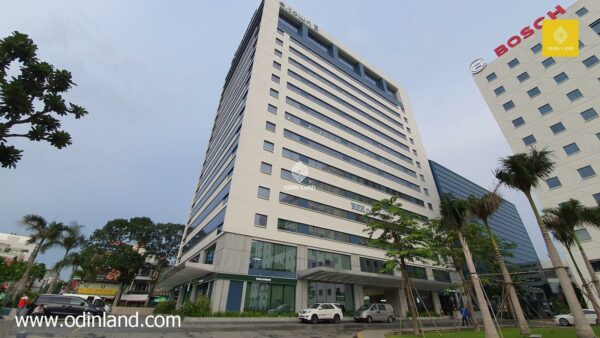
And to be fair, recent quarterly telemetry from CBRE and Savills paints a fascinating, almost tale-of-two-cities contrast between Vietnam’s economic powerhouses. In the office for rent Ho Chi Minh City market, Grade A vacancy spiked sharply after a massive wave of shiny new mega-towers opened along both banks of the Saigon River in Thu Thiem and the waterfront core. Meanwhile, over in the office for rent Hanoi scene, things are totally fragmented: the historic Old Quarter core is still locked up tight, while the Western technology corridor is locked in a fierce street fight for tenants.
Now, if you’re a landlord, yeah, this is terrifying stuff. But if you’re an actual business owner or CFO paying the monthly lease check? Double-digit vacancy isn’t a crisis at all — it’s an absolute liberation day. It’s the great commercial power shift that finally hands the steering wheel back to the people who pay the bills.
1. The Raw Numbers: A Tale of Two Different Markets
Let’s look at the actual data without the broker spin. Down in Ho Chi Minh City, after hundreds of thousands of square meters of pristine Grade A space came online almost back-to-back, high-end vacancy climbed between 18% and 22% in several sub-districts. That is a wild anomaly compared to the previous decade, when District 1 was running on sub-5% vacancy and landlords could basically treat prospective tenants like people begging for soup in a blizzard.
Up north in Hanoi, overall citywide vacancy hovers around 14% to 16%, but the map is deeply fractured:
- Hoan Kiem (Historic Diplomatic Core): Hovers at a stubbornly tight 4% to 7% simply because you literally cannot build new commercial towers there without knocking down a national heritage site.
- Cau Giay and Nam Tu Liem (The Western Tech Belt): Spikes to 20% to 25% whenever modern office complexes open their doors, creating intense localized dogfights to fill up floorplates.

2. The Tenant’s Market: Crushing Landlord Arrogance
For almost a decade, landlords held all the cards. If you’ve leased an office in Saigon or Hanoi anytime between 2015 and 2021, you know the drill — it was basically an exercise in public humiliation:
- Standard take-it-or-leave-it contracts with brutal one-sided clauses: astronomical late fees, zero accountability for HVAC breakdowns during sweaty summer afternoons, and strict bans on bringing in your own fiber-optic ISP.
- Automatic 10% to 15% rent hikes baked in every three years. Don’t like it? pack your bags in 30 days and get out.
- Outrageous nickel-and-diming for overtime air-conditioning, after-hours elevator usage, and motorcycle parking spots.
“Double-digit vacancy shattered that cozy monopoly overnight. For the first time in an entire generation, landlords have to treat tenants like actual paying customers instead of hostages.”
Here is what this sudden power shift looks like on the ground right now:
- Landlords have to hustle: Instead of lounging in air-conditioned suites waiting for brokers to drag naive founders to their desk, leasing directors at billion-dong towers are actively pitching CEOs, offering custom rent abatements, and following up on WhatsApp like hungry startup sales reps.
- Unheard-of contract flexibility: Savvy tenants are ruthlessly striking out boilerplate penalty clauses. They are locking in 5-year fixed rent rates, demanding 4 to 6 months of rent-free fit-out periods, and getting entire allotments of free motorcycle parking for their 120-person engineering teams.
- Older towers forced to step up: Aging buildings that haven’t spent a dime on capex since 2014 are panic-renovating their lobbies, installing smart touchless elevators, upgrading ancient chillers, and retraining surly security guards who used to yell at delivery drivers.
3. Fragmented Hanoi vs Interconnected Saigon
The structural geography of both cities completely changes how you play this game.
In Hanoi, the market is split into three completely different universes:
- Hoan Kiem: Frozen in amber. Embassies, legacy global banks, and foreign chambers of commerce sit tight. Landlords still act proud because there are basically zero equivalent diplomatic-grade alternatives nearby.
- Ba Dinh & Dong Da (Midtown): Intense musical chairs. Mid-tier Grade B tenants are constantly bouncing between 15-year-old towers to shave $2 off their monthly square-meter rate.
- Cau Giay & Nam Tu Liem (West Tech Core): Ground zero for aggressive price slashing. With shiny new glass towers opening down the street from each other, developers are throwing every perk under the sun to win over outsourcing studios and gaming startups.

In Ho Chi Minh City, everything is interconnected. Thu Thiem is just a quick dash over the Ba Son Bridge from District 1. When a million square feet of Grade A space drops in Thu Thiem, it instantly puts an immense squeeze on towers along Le Duan, Nguyen Hue, and Ton Duc Thang. Saigon tenants are culturally much more agile — they don’t have an emotional loyalty to a particular street if crossing the bridge saves them $15,000 a month in net operational overhead.
4. The Tactical Playbook: How to Exploit This Window
If your commercial lease is expiring within the next 6 to 12 months, this is literally the best renegotiation window you will see for the next five years. Don’t waste it:
- Never auto-renew on the landlord’s first email: Even if you love your current building, pretend you’re halfway out the door. Have a broker pull vacancy numbers and asking rents for every comparable building within a 2-mile radius. Walk into the meeting with those competing proposals sitting casually on the table.
- Target invisible perks if face rent is stubborn: If your landlord is backed by a REIT or institutional fund that refuses to lower headline rent (to protect their debt covenants with banks), pivot immediately to soft concessions: demand 6 months free rent upfront, push them to cover all centralized AC maintenance, or demand free after-hours chiller access for your offshore night shift.
- Lock in a 5-year rate cap: Markets move in cycles. Once this current wave of new supply is absorbed in 2027-2028, vacancy will tighten and landlords will get arrogant again. Lock in your defensive pricing now while the shoe is firmly on your foot.
At the end of the day, commercial real estate statistics are just numbers on a spreadsheet. What matters is knowing when the tide has turned in your favor — and having the guts to play your winning hand before the music stops.
Ready to see what landlords are really willing to offer right now? Reach out to our team at Odin Land for unvarnished market rates and bulletproof negotiation support across Hanoi and HCMC.
Doanh Nghiệp Của Bạn Đang Tìm Thuê Văn Phòng Phù Hợp?
Odin Land hiện là đơn vị quản lý giỏ hàng hơn 2.500+ tòa nhà văn phòng cao cấp từ Hạng A, B đến Co-working Space hiện đại trên toàn quốc. Nhận bảng báo giá chi tiết, diện tích trống và phương án tối ưu chi phí trong 15 phút.